Trust, Compliance & AI: PDPA in Malaysian Healthcare
Trust, Compliance, PDPA, AI Chatbots, Healthcare
Trust, Compliance and Risk: PDPA and AI Chatbots in Malaysian Healthcare
As Malaysian businesses embrace AI chatbots, especially in healthcare and insurance, one question sits at the centre of every boardroom discussion: can customers trust you with their data and their health questions? With the updated PDPA regime and new AI guidelines, “move fast and break things” is no longer an option.
1. Trust, compliance and risk in the age of AI chatbots
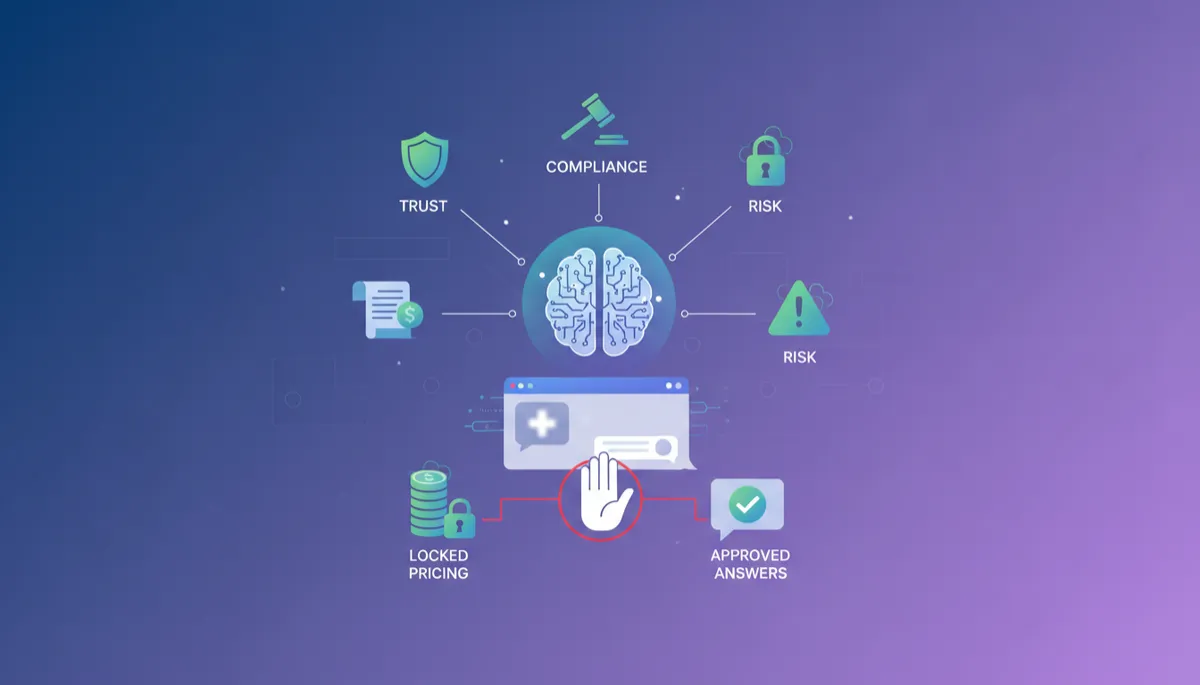
In 2026, trust is not a marketing slogan; it is a regulatory and commercial asset. For Malaysian healthcare providers, insurers, pharmacies, and telehealth platforms, AI chatbots touch three sensitive areas at once: personal data, medical information, and pricing.
A chatbot that leaks personal data, misquotes a treatment price, or gives unsafe health advice does more than annoy customers. It can:
Trigger investigations under the Personal Data Protection Act (PDPA) 2010 and its 2024 amendments, with penalties up to RM 1 million and even imprisonment.
Breach ethical expectations under Malaysia’s AI governance and medical guidelines, including the National AI Governance and Ethics Guidelines (AIGE) and the Malaysian Medical Council’s guidance on AI in clinical practice.
Damage brand trust in a way that is hard to repair, especially when screenshots of “wrong answers” spread quickly on social media.
📌 Key takeaway: For Malaysian businesses, chatbot projects are not just IT experiments; they are risk and compliance projects that must be designed with governance from day one.
2. PDPA and AI chatbots: the new compliance baseline
The PDPA (Amendment) Act 2024, fully in force since June 2025, has raised the bar for any organisation using chatbots to process personal data in Malaysia. Several changes are especially relevant to AI deployments:
Mandatory Data Protection Officer (DPO) for organisations meeting certain thresholds – your chatbot programme should sit squarely within the DPO’s oversight and reporting line.
72-hour breach notification – if a chatbot leaks chat logs, health details or identifiers, you may have only three days to notify the Commissioner and affected individuals.
Biometric data (for example, facial scans or voiceprints used for verification in a chatbot) is now sensitive personal data, requiring explicit consent and stronger safeguards.
Cross-border transfers – sending chat logs to overseas AI providers is allowed only if you can justify that the destination offers adequate or substantially similar protection, and you document that assessment.
In 2026, the Personal Data Protection Department also released three key guidelines: Data Protection Impact Assessment (DPIA), Data Protection by Design (DPbD) and Automated Decision-Making and Profiling (ADMP). Together, they push organisations to build privacy and transparency into systems like AI chatbots from the design stage, not as an afterthought.
💡 Pro tip: Treat every new chatbot rollout as a “high-risk processing” project and run a DPIA that explicitly covers data flows, model training, retention, and third-party vendors.
3. What Malaysian businesses must know about customer data in chatbots
Whether you run a hospital, clinic chain, healthtech startup, or insurance portal, your chatbot is now a live data collection point. To stay on the right side of PDPA and emerging AI rules, you should be clear on at least five issues:
What data is being collected? Beyond obvious fields like name and IC number, chat transcripts may contain symptoms, diagnoses, lab results, and even family history. These are highly sensitive in practice, even when PDPA uses broader categories.
Where is the data stored and processed? Are you sending prompts and responses to an overseas LLM provider? If yes, you must assess adequacy, include cross-border clauses in contracts, and be ready to show your reasoning to regulators.
Is the data used for training? Many AI platforms use customer conversations to improve models by default. Under PDPA, this is a separate processing purpose that requires clear notice and, in many cases, consent or an opt-out.
How long do you retain chat logs? “Forever” is not a defensible answer. Retention must be tied to specific business purposes and security considerations, and documented in your retention schedule.
Can customers exercise their rights? With data portability and access rights now recognised, you must be able to retrieve, export, and, where appropriate, delete or correct data that sits inside chatbot systems.
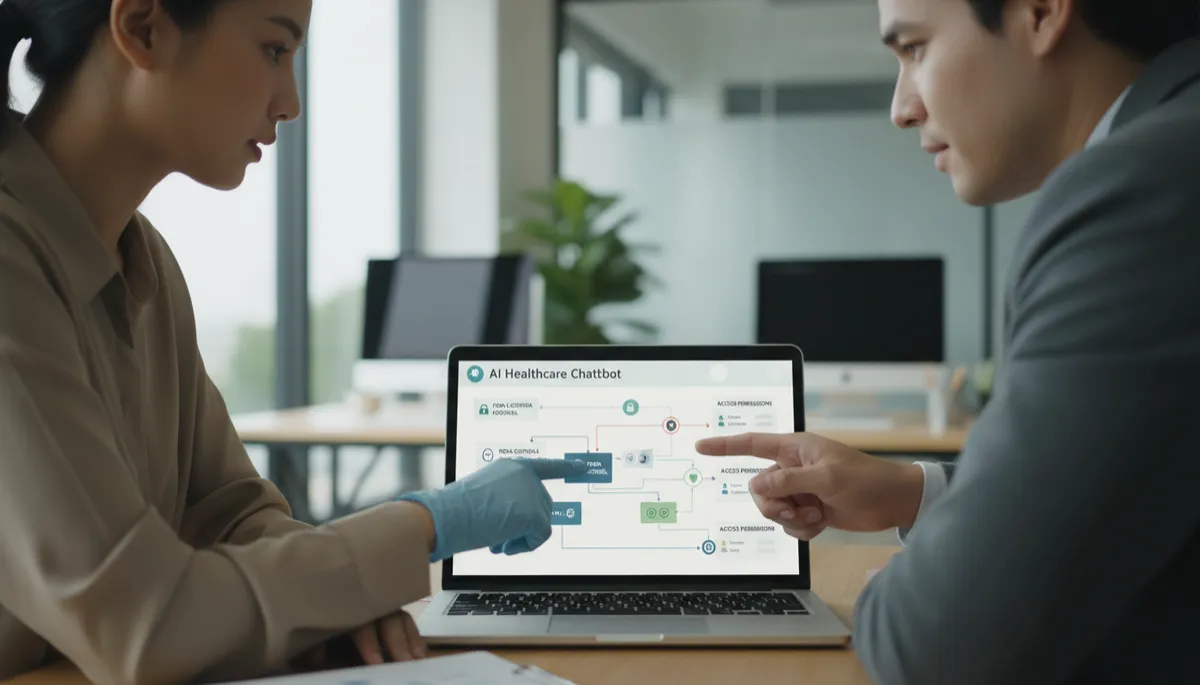
Joint reviews between compliance and IT teams reduce hidden data risks in chatbots.
4. How to stop a chatbot from giving wrong medical or pricing information
Large language models are powerful, but they can “hallucinate” – confidently generating wrong answers. In healthcare and pricing, this is not just embarrassing; it can cause real harm or financial disputes. Several practical controls can dramatically reduce that risk:
Limit the chatbot’s scope. Configure it to provide general wellness information and administrative support (appointments, clinic hours, basic coverage rules), not personalised diagnoses or treatment decisions. Direct high-risk questions to human professionals or a teleconsult platform.
Use a curated knowledge base. Instead of letting the model “guess”, connect it to an approved medical and pricing knowledge base built from national guidelines, internal SOPs, and official fee schedules. Responses should be retrieved from this source, not invented on the fly.
Implement guardrails and refusals. Program the chatbot to explicitly say “I cannot answer this” when questions go beyond its scope – for example, complex medication interactions, emergency symptoms, or price negotiations. This aligns with MMC and AIGE principles on safety and human oversight.
Add medical and pricing review workflows. For sensitive topics, use human-in-the-loop designs: the chatbot drafts an answer from the knowledge base, but a clinician or billing officer approves it before the user sees it, at least for higher-risk use cases or early pilots.
Include clear disclaimers and escalation paths. Remind users that the chatbot does not replace professional medical advice and provide one-tap options to call, book, or chat with a human professional when red-flag symptoms or disputes arise.
⚠️ Warning: Relying on a “generic” public chatbot for patient or pricing queries, without domain guardrails or curated content, is a direct conflict with safety and accountability principles in Malaysian AI and medical ethics guidelines.
5. Why locked pricing and approved answers matter for healthcare chatbots
In healthcare, a “creative” chatbot is a liability. Patients and customers expect that prices, coverage details, and medical information are consistent with what appears on your website, invoices, and consent forms. This is where locked pricing and approved answers become essential design choices, not just nice-to-have features.
Locked pricing: The chatbot should only pull fees and package prices from a central, version-controlled source (for example, your billing system or approved fee table). Staff can update prices there, but the chatbot itself cannot “make up” numbers or apply ad-hoc discounts. This protects you against disputes (“the bot told me RM 300, not RM 500”) and supports fair, transparent pricing.
Approved medical answers: For frequently asked questions – vaccines, screening intervals, fasting rules, medication refills – answers should be written or vetted by clinicians, aligned with Ministry of Health and MMC guidance, and locked in a content library. The chatbot then selects and lightly personalises these, instead of generating new medical explanations each time.
This “locked and approved” approach delivers three strategic benefits:
Regulatory defensibility. If regulators or courts ask how an answer was produced, you can point to a controlled knowledge base, medical sign-off records, and change logs – not a black-box model improvising in real time.
Consistency across channels. Patients receive the same explanation whether they call the hotline, read the brochure, or chat with your bot, which strengthens trust and reduces complaints.
Easier audits and updates. When guidelines change – for example, a new vaccination schedule – you update one approved answer set and one pricing table, and every chatbot response changes immediately.
6. Moving forward: building trustworthy AI chatbots in Malaysian healthcare
Malaysia’s regulatory direction is clear: PDPA amendments, new JPDP guidelines, sector frameworks like Online Healthcare Services 2025, and the upcoming AI Governance Bill all push organisations toward responsible, well-governed AI. For healthcare and other sensitive sectors, that means:
Embedding privacy, security, and human oversight into chatbot design (DPIA and DPbD, not just UX and speed).
Treating medical and pricing information as controlled content, not creative output.
Aligning with ethical expectations from MMC, MDA, MOSTI and MOH, especially around safety, transparency and accountability.
Done well, AI chatbots can reduce call-centre load, improve patient experience, and support better health literacy – without sacrificing trust. The organisations that win in this space will be those that treat PDPA and AI governance not as obstacles, but as a blueprint for building safer, more reliable digital conversations with their customers.
