Top 11 AI-Enhanced CRMs in 2026 for Sales Success
CRM, Sales Technology, AI
11 CRMs That Now Offer AI in 2026 (And How to Make the Most of Them)
AI has quietly moved from “nice-to-have” to the backbone of modern CRM. In fact, HubSpot’s 2026 Sales Trends data shows that three out of four salespeople say AI in their CRM has directly improved their sales outcomes. If you’re still treating AI as an experiment instead of a core sales tool, you’re leaving revenue on the table.
How AI CRMs Changed the Game by 2026
By 2026, AI CRM no longer just means a chatbot or an email writer. Leading platforms now combine: predictive analytics (who’s likely to buy), assistant-style copilots (what to do next), and increasingly agentic AI that can execute multi-step tasks on its own. Forbes and Gartner both point to AI as the next frontier of CRM, driving personalization, automation, and real-time decision-making across the entire customer journey.
Below is a practical review of 11 gen‑AI‑powered CRMs to watch in 2026—and concrete tips to squeeze maximum value from each one.
1. Salesforce (Einstein + Agentforce)
Salesforce remains the flagship enterprise AI CRM. Einstein surfaces predictive scores, opportunity insights, and next-best actions, while Agentforce introduces agentic AI that can qualify leads, triage support cases, and run playbooks autonomously. It’s powerful, but pricing and implementation complexity mean it’s best for large organizations with dedicated ops support.
How to make the most of it: Start with one high-impact workflow—like lead qualification or renewal risk alerts—before unleashing Agentforce across your entire revenue team. Measure lift in conversion or retention to justify broader rollout.
2. HubSpot CRM (Breeze AI and Smart CRM)
HubSpot has leaned fully into AI-native selling. Breeze AI drafts and refines outreach, summarizes calls, and suggests follow-ups. Prospecting Agent books more meetings, while AI Deal Intelligence helps reps prioritize deals more accurately. HubSpot’s own data shows AI users booking dramatically more meetings and closing deals faster, aligning with its Sales Trends finding that the vast majority of teams now use AI daily.
How to make the most of it: Standardize AI email and call templates at the team level. Require reps to use Breeze drafts as a starting point, then personalize the top 10–20% so messages stay human but ship faster.
3. Microsoft Dynamics 365 (Copilot)
Dynamics 365 shines where organizations already run on Outlook, Teams, and Microsoft 365. Copilot weaves AI into everyday tools: summarizing email threads, surfacing CRM context inside Teams, and generating proposals from CRM data. It’s less flashy than some AI‑native newcomers, but deeply practical for Microsoft-centric teams.
How to make the most of it: Train reps to live in Outlook and Teams while Copilot quietly updates CRM fields and drafts responses. The more complete your data model, the better Copilot’s suggestions become.
4. Zoho CRM (Zia)
Zoho’s AI assistant, Zia, focuses on forecasting, anomaly detection, and lead/deal scoring at a notably low price point. It’s often cited as delivering strong “AI per dollar,” making it attractive for lean teams that still want predictive insights and automation.
How to make the most of it: Use Zia’s scoring to redesign your qualification criteria. Route only high-scoring leads to sales and nurture the rest automatically, then monitor whether close rates and sales cycle times improve.
5. ServiceNow (Now Platform CRM)
ServiceNow, recognized by several analysts as a top agentic AI CRM in 2026, extends beyond sales into service and operations. Its AI can orchestrate multi-step workflows—like onboarding a new customer or resolving complex support issues—while escalating to humans only when needed.
How to make the most of it: Map your most painful cross-team process—say, quote-to-cash—and let ServiceNow’s AI orchestrate handoffs, approvals, and notifications. Track reductions in cycle time and error rates.
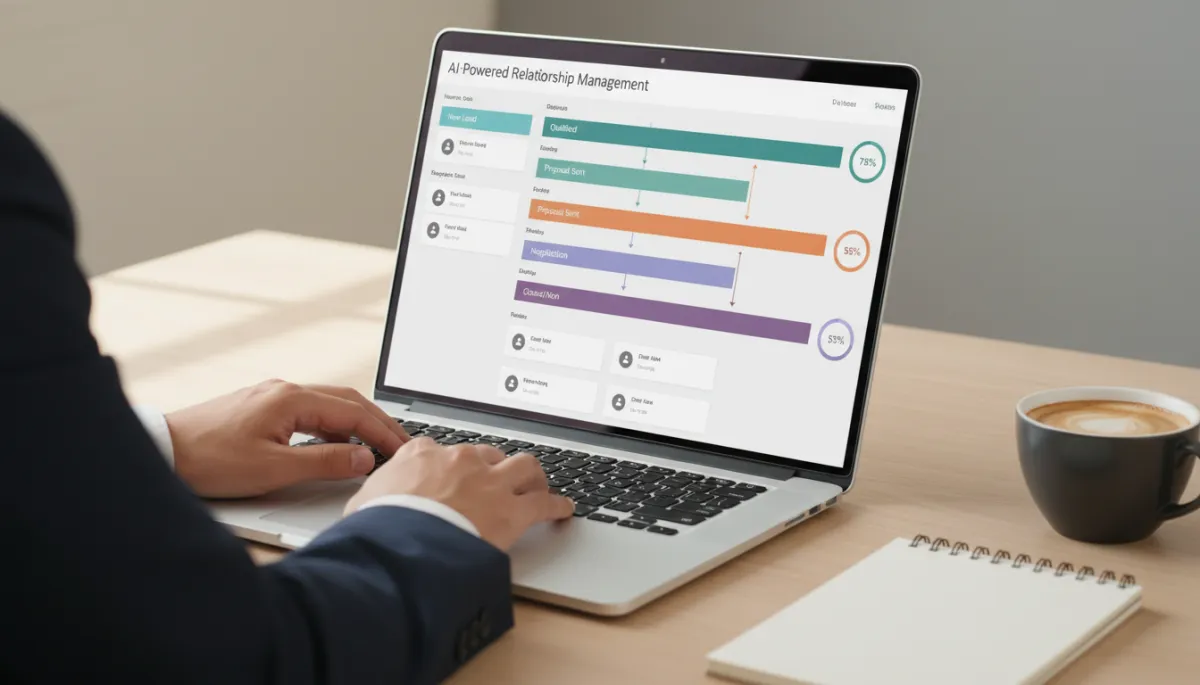
Predictive scoring helps reps focus on deals most likely to close this quarter.
6. OpsLink
OpsLink is an AI-native platform that blends CRM with project management, HR, and client portals. Voice AIs (Luna, Vera) and dashboard AI (Nova) sit on a unified database, avoiding the sync headaches that plague bolt-on tools. Pricing is predictable, with no per-action AI fees, making it appealing to growing SMBs.
How to make the most of it: Centralize as many client-facing workflows as possible into OpsLink so its AI has full context—sales, delivery, and support. The richer the shared dataset, the smarter its recommendations.
7. Attio
Attio is designed as a flexible, AI-first CRM for startups and SaaS teams. Its strength lies in a modern data model and “universal context,” allowing AI to help with everything from building views to summarizing account histories and generating outreach that reflects nuanced relationship data.
How to make the most of it: Define a few high-signal fields—like product usage or last activity—and build AI-powered views around them. Let Attio surface at-risk or expansion-ready accounts weekly for account managers.
8. Folk (folk.app)
Folk positions itself as a relationship-first CRM with native AI enrichment. It automatically updates contact records, summarizes interactions, and drafts highly contextual messages. It’s especially popular with business development, partnerships, and recruiting teams that live in their contact lists.
How to make the most of it: Use Folk’s enrichment to keep contact data fresh, then rely on AI to craft tailored follow-ups after events or campaigns. Measure response rates before and after to quantify impact.
9. Pipedrive (AI Sales Assistant)
Pipedrive’s AI layer focuses on helping small and mid-sized teams manage pipelines more intelligently. Its assistant flags stalled deals, suggests activities, and can auto-generate emails and call scripts. The interface remains simple, which keeps adoption high even for non-technical reps.
How to make the most of it: Turn on AI nudges and make them part of your daily standup: review “deals at risk” and “recommended actions” together so managers coach around AI insights, not just gut feel.
10. Freshsales (Freshworks)
Freshsales brings AI into lead scoring, email suggestions, and conversational bots across web and messaging channels. For organizations already using Freshdesk or other Freshworks tools, its AI helps unify support and sales data into a single, more intelligent view of the customer.
How to make the most of it: Connect support and sales workspaces so AI can see tickets and purchase history together. Then prioritize outreach to customers who show both high engagement and recent friction—before they churn.
11. Copper CRM (Google Workspace–Native AI)
Copper is built for teams that live in Google Workspace. Its AI helps capture and enrich data from Gmail and Calendar automatically, suggests next steps on deals, and drafts emails in context. For Google-first startups and agencies, it offers a low-friction way to get AI into CRM without changing how reps work.
How to make the most of it: Make sure every rep connects Gmail and Calendar, then let AI handle logging and enrichment. Use the time saved to increase personalized touches on high-value accounts.
Turning “AI in CRM” into Real Revenue Gains
Across platforms, the pattern is clear: teams that embrace AI inside their CRM sell more, faster. HubSpot’s Sales Trends data underscores this, with three out of four salespeople reporting that AI in their CRM has directly improved their sales outcomes. But the gains don’t come from turning on every feature—they come from focusing AI on a few critical revenue levers:
Prospecting: Let AI research, prioritize, and draft first-touch outreach so reps spend more time in conversations, not spreadsheets.
Pipeline focus: Use predictive scoring and deal intelligence to decide where to spend this week’s time and budget.
Follow-through: Rely on AI reminders and automated sequences to close the gap between “great call” and “signed contract.”
📌 Key takeaway: Start by choosing one or two AI-powered workflows to optimize—like lead routing or renewal risk—and tie them to clear metrics such as win rate, cycle length, or expansion revenue. Prove value there, then scale.
Whether you opt for a heavyweight like Salesforce or ServiceNow, a balanced platform like HubSpot, or an AI-native challenger such as OpsLink, Attio, or Folk, the goal is the same: a CRM where AI quietly handles the busywork and complexity so your team can focus on the human side of selling.
