Enterprise Marketing Automation & AI Evolution 2026
Marketing, Automation, Enterprise AI
What Is Enterprise Marketing Automation? Features, Platforms, and the 2026 Shift to Agentic AI
Enterprise marketing automation has entered a new era. In 2026, the biggest change is the move from simple “if opened, then send” rules to agentic AI that can reason toward outcomes like retention, revenue, and loyalty—often faster and more efficiently than human-built workflows alone.
What is enterprise marketing automation?
Enterprise marketing automation is the coordinated use of software, data, and AI to plan, execute, and optimize marketing across channels at scale. Instead of manually building every email, ad, and nurture stream, teams define audiences, goals, and guardrails—then let the system handle orchestration, measurement, and continuous improvement.
In large organizations, this spans email, paid media, web, mobile, and offline touchpoints, connecting into CRM, data warehouses, and analytics. By 2026, around 92% of enterprises use some form of marketing automation, and it is responsible for a significant share of marketing-sourced revenue and pipeline.
Core features of enterprise marketing automation
Multichannel orchestration: Coordinate journeys across email, SMS, push, web personalization, and paid media from a single brain, not disconnected tools.
Audience and segmentation: Build dynamic segments using behavioral, transactional, and demographic data, updated in real time as customers act (or fail to act).
Lead scoring and nurturing: Assign scores based on engagement, fit, and intent, then trigger tailored nurture tracks to move prospects toward sales-readiness.
Content and offer personalization: Automatically vary subject lines, copy, creative, and offers by segment, lifecycle stage, or predicted propensity to convert or churn.
Testing and optimization: Run A/B and multivariate tests, then let the system allocate more budget or volume to winning variants without manual babysitting.
Measurement and attribution: Tie campaigns to pipeline, revenue, and retention so leaders can see which journeys and channels truly drive business outcomes.
Leading platforms in 2026
The enterprise landscape is crowded, but a few categories stand out:
Full-stack suites: Platforms like Adobe Marketo, Salesforce Marketing Cloud, and HubSpot offer end-to-end capabilities, from email and ads to analytics and sales handoff. They remain go-to choices for organizations that want a unified stack and deep CRM ties.
Vertical and commerce-focused tools: Klaviyo and similar tools dominate eCommerce by pairing automation with rich product and purchase data, enabling sophisticated cart abandonment, replenishment, and cross-sell flows.
Composable, data-centric stacks: Many enterprises are shifting to architectures where a central data cloud (such as Snowflake) powers multiple specialized apps. In these setups, AI decisioning layers and agent frameworks sit on top of governed data, orchestrating campaigns across tools rather than living inside a single platform.
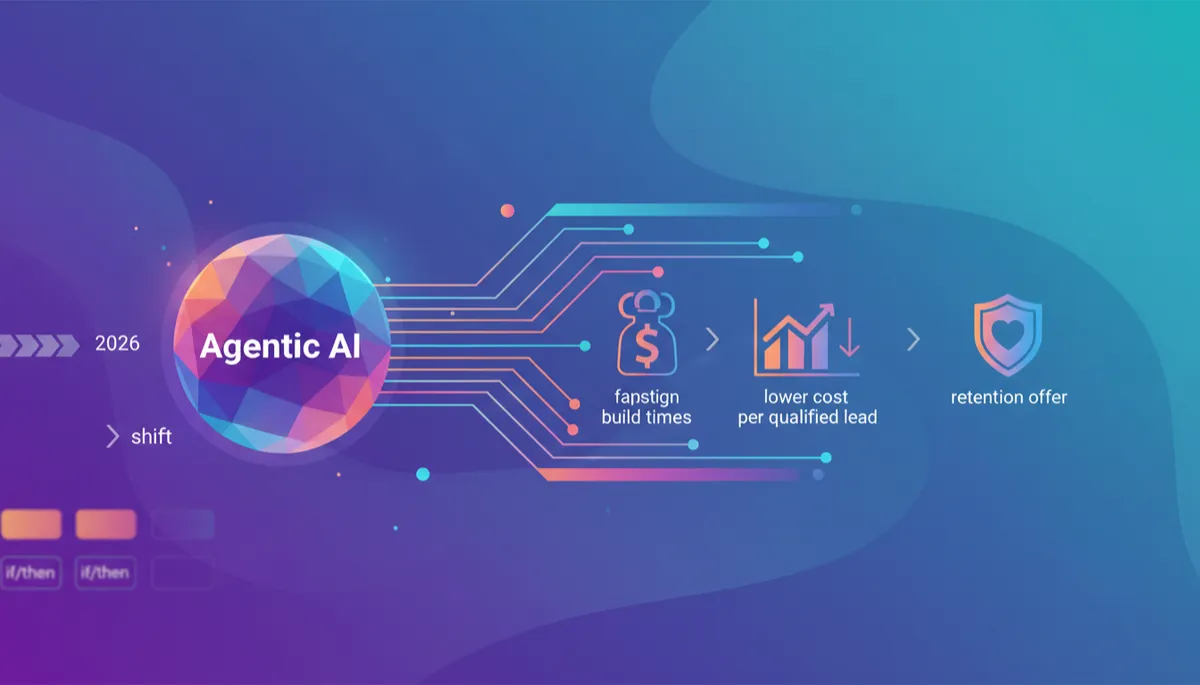
Teams using agentic workflows report 27% faster builds and 19% lower cost per qualified lead.
From rule-based flows to agentic AI in 2026
Traditional automation relied on static rules: if opened, then send; if clicked, then score +10; if inactive 30 days, then send win-back. Useful, but brittle. Every new journey required humans to assemble each step, anticipate every branch, and maintain logic as customer behavior and channels evolved.
In 2026, the frontier is agentic AI—autonomous marketing agents that reason toward a goal instead of simply firing prewritten rules. These agents can:
Understand objectives such as “reduce churn in this segment by 10%” or “increase qualified leads in APAC by 20%.”
Plan multistep sequences across channels, selecting messages, timing, and offers based on real-time data and learned patterns.
Continuously adjust campaigns as performance data, audience behavior, and constraints (like budget or compliance rules) change.
Analyst firms note that by 2028, a majority of brands are expected to use agentic AI for one-to-one interactions, and already in 2026, most enterprise applications ship with at least one embedded AI agent. Yet only a small fraction of organizations run fully autonomous, multi-agent campaigns—meaning the competitive advantage is still available to early adopters.
How agentic AI evaluates churn risk and deploys retention offers
A clear example of this shift is churn management. In a rule-based world, a marketer might build a flow like: if no purchase in 60 days and last email unopened, then send 10% off coupon. It is simple—and often too simplistic to catch nuanced churn signals or protect margin.
An agentic AI, by contrast, can:
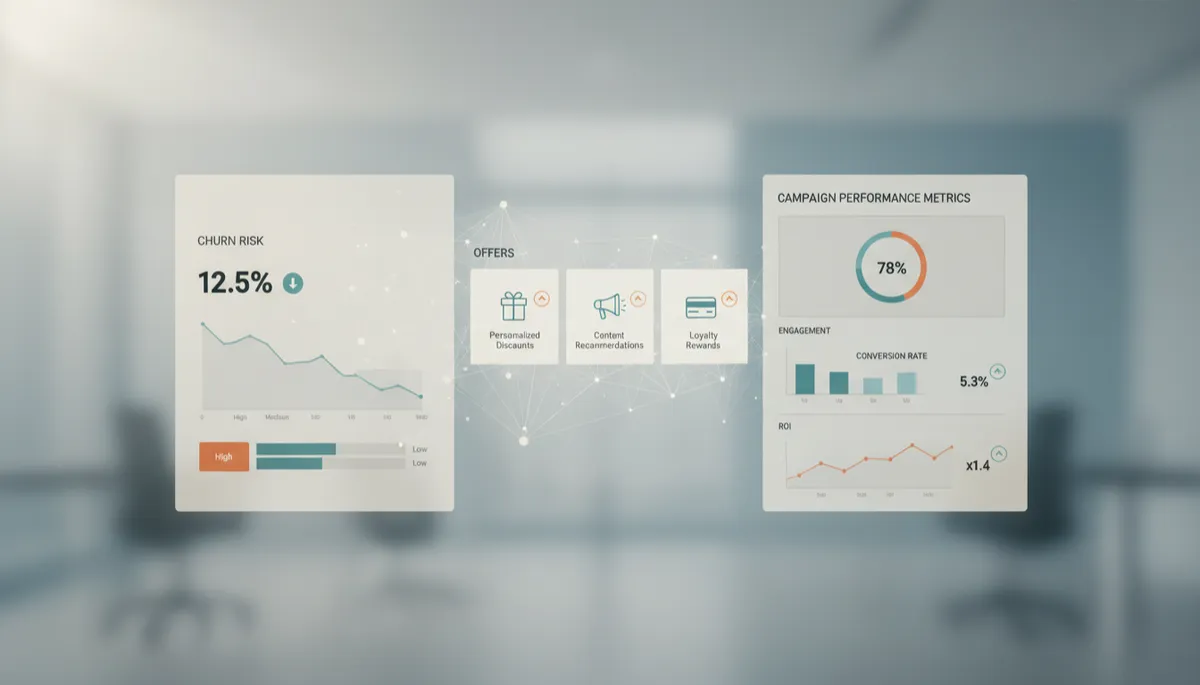
Evaluate churn risk continuously: It ingests product usage, support tickets, browsing behavior, payment history, and even sentiment from surveys or social interactions to assign a real-time churn probability to each account or customer.
Segment by value and sensitivity: It distinguishes high-lifetime-value customers from discount-driven shoppers and tailors strategies accordingly, rather than blasting the same offer to everyone at risk.
Select and deploy the right retention offer: For one customer, the best move might be a proactive onboarding call; for another, extended trial access or a targeted discount. The agent chooses the channel, timing, and creative, then launches the intervention automatically within your guardrails.
Learn from outcomes: As customers respond—or fail to respond—the agent refines its models, improving future churn predictions and offer selection with each cycle.
Crucially, marketers no longer need to manually assemble every “if-then” branch. They define objectives, constraints, and brand rules; the agent handles the rest, at a scale and speed humans cannot match alone.
Measured impact: faster campaigns, lower cost per lead
Early adopters of agentic workflows are already seeing tangible performance gains. Teams that have shifted from manually configured rule trees to AI-driven agents report:
27% faster campaign build times — because marketers spend less time wiring steps and more time defining strategy, creative direction, and guardrails. Agents handle the repetitive assembly work and reuse proven patterns across markets and segments.
19% lower cost per qualified lead — as AI improves targeting, prioritizes high-propensity segments, and automatically reallocates spend toward the channels and messages that generate the most sales-ready opportunities.
These gains echo broader industry findings that advanced automation can significantly boost marketing ROI while reducing overhead, effectively “self-funding” further investment in AI capabilities and data infrastructure.
Best practices for adopting agentic marketing automation
Start with clear, outcome-based use cases. Choose focused goals—such as “reduce churn in the top 20% of accounts” or “increase qualified leads from a specific region”—before unleashing agents broadly. Narrow scopes make measurement and governance manageable.
Invest in clean, governed data. Agentic AI is only as strong as the data it consumes. Prioritize identity resolution, consent management, and a unified customer view so agents can make trustworthy decisions across channels and brands.
Define guardrails, not micromanaged rules. Set boundaries around brand voice, offer limits, regulatory requirements, and escalation paths. Let agents explore within these constraints instead of scripting every possible branch in advance.
Pair agents with human oversight. Marketers should play the role of strategist and editor-in-chief, reviewing agent proposals, approving experiments, and stepping in when judgment or nuance is required—especially in sensitive segments or regulated industries.
Measure and communicate impact. Track metrics like campaign cycle time, cost per qualified lead, churn rate, and incremental revenue. Sharing concrete results—such as 27% faster builds or 19% lower CPQL—helps secure executive support and budget for further transformation.
The road ahead for enterprise marketing teams
Enterprise marketing automation is no longer just about sending the right email at the right time. In 2026, it is about partnering with agentic AI that can reason toward business goals, evaluate churn risk in real time, and deploy the right retention or acquisition tactic without requiring humans to stitch together every “if-then” path by hand.
Teams that embrace this shift—grounded in strong data foundations, thoughtful governance, and clear outcomes—are already seeing faster campaign cycles and more efficient lead generation. Those that remain locked in rule-based thinking risk falling behind as AI-powered competitors deliver more relevant experiences at a fraction of the cost and effort.
