Effective Customer Support Automation in 2026
Customer Support, Automation, AI
Customer Support Automation: What Actually Works in 2026
By 2026, customers expect fast, precise, and personal help—not another maze of deflective bots. The teams winning today are the ones using AI as a context engine, not just a cheaper front line.
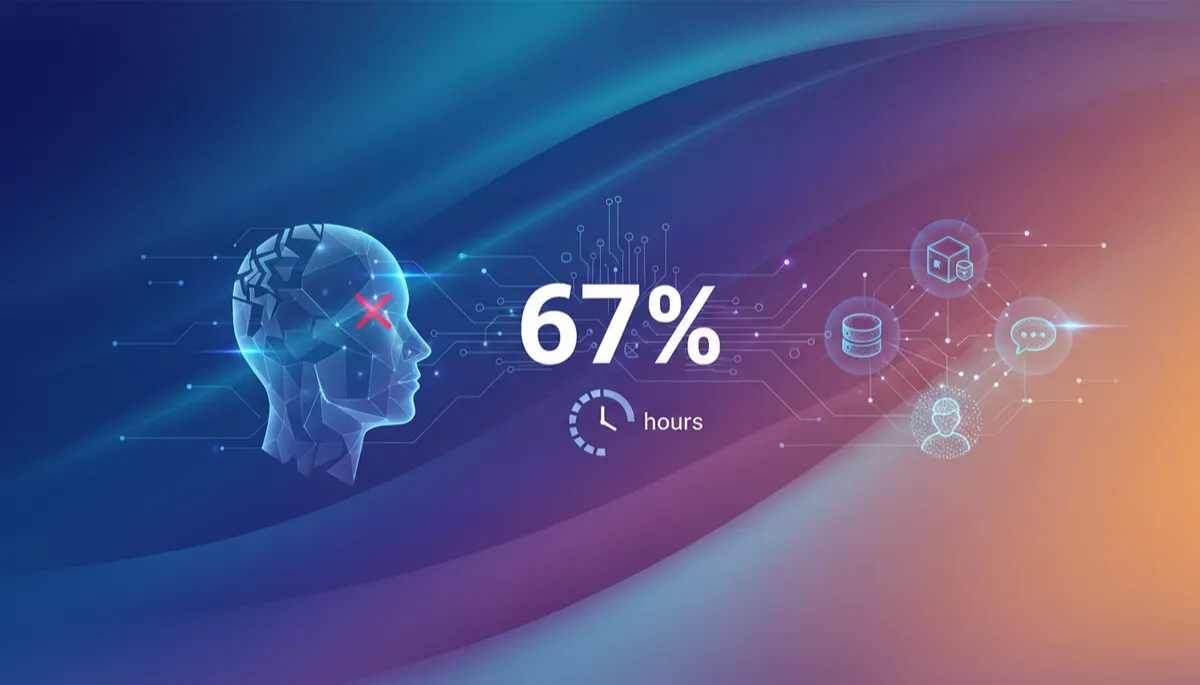
In 2026, customer support automation is no longer a “nice to have.” Research shows that 67% of customers expect companies to resolve issues within three hours, regardless of channel or time zone. At the same time, Gartner predicts that by 2026, around 75% of customer service organizations will use AI in some form to meet these expectations. Yet many teams are still frustrated—because they have the tools, but not the outcomes.
The Old Playbook: Bolt-On Bots and Manual Chaos
A common pattern has emerged over the last few years: companies bolt AI onto manual routing and rule-based bots, hoping for instant efficiency. A chatbot greets the customer, asks a few rigid questions, then either serves a generic FAQ link or shunts the ticket into the same overloaded queue as before. Little has truly changed.
This “AI veneer” approach creates three problems:
Deflection over resolution: Bots are measured on how many tickets they avoid, not how many they actually solve.
No continuity: When an agent finally joins, they see a fragmented view—chat logs here, CRM notes there, workflow history somewhere else.
Slow resolution times: The customer has repeated their story across channels, and the three‑hour expectation evaporates in back‑and‑forth clarification.
The result is what many leaders quietly admit: automation that looks modern on the surface, but still leaves customers waiting and agents scrambling.
What Works in 2026: Shared Context, Not Just Smarter Bots
The teams actually meeting that three‑hour resolution expectation are doing something different. Instead of treating AI as a separate layer, they are building effective service AI around shared context. That means every interaction is grounded in the same, up‑to‑date picture of the customer and the work happening behind the scenes.
In practice, that looks like:
Shared context across agents: AI summarizes past conversations, open tickets, and sentiment so any agent can jump in with full awareness—no “let me read the history” delay.
Shared context across workflows: The same system knows which automations are running—refund approvals, password resets, provisioning scripts—and can trigger or update them without hand‑offs.
Shared context with CRM data: AI has direct access to account status, product usage, SLAs, and purchase history, enabling personalized decisions instead of one‑size‑fits‑all replies.

Shared context lets AI and agents resolve issues in one guided flow, not five disjointed steps.
Forbes and McKinsey both highlight this shift: AI is most effective when it is deeply integrated with data and processes, not when it operates as a disconnected chatbot. In other words, context is the new UI for customer support automation.
The New Role of Chatbots: QA-Driven, Context-Aware Problem Solvers
This is where chatbot QA work becomes strategically important. In 2026, the question is no longer “Do you have a bot?” but “Does your bot consistently resolve real issues using the same context your agents rely on?”
Effective chatbot QA now focuses on:
Resolution accuracy: Testing whether automated flows actually fix the problem, not just provide information or stall for time.
Context usage: Verifying that the bot correctly pulls from CRM, ticket history, and workflow data before making suggestions or changes.
Seamless hand‑offs: Ensuring that when a human takes over, they receive a clean summary of what the AI did, what it learned, and what remains unresolved.
💡 Pro Tip: Treat every chatbot conversation as test data. Feed failures back into your QA process so the AI learns from real‑world edge cases, not just scripted scenarios.
Building Toward the Three-Hour Promise
Meeting the expectation that 67% of customers have—resolution within three hours—doesn’t come from adding more channels or deploying yet another rules‑based bot. It comes from designing automation around shared, reliable context and holding your AI to the same QA standards as your human team.
In 2026, the question to ask of any support automation project is simple: Will this help us resolve more issues, faster, with a full understanding of the customer? If the answer is yes—and if your chatbot QA work proves it in practice—you are on the right side of where customer support automation is headed.
