Transform Business with AI: A Day in the Life
Customer Experience, AI Automation
A Day in the Life of Your Business: With AI vs Without It
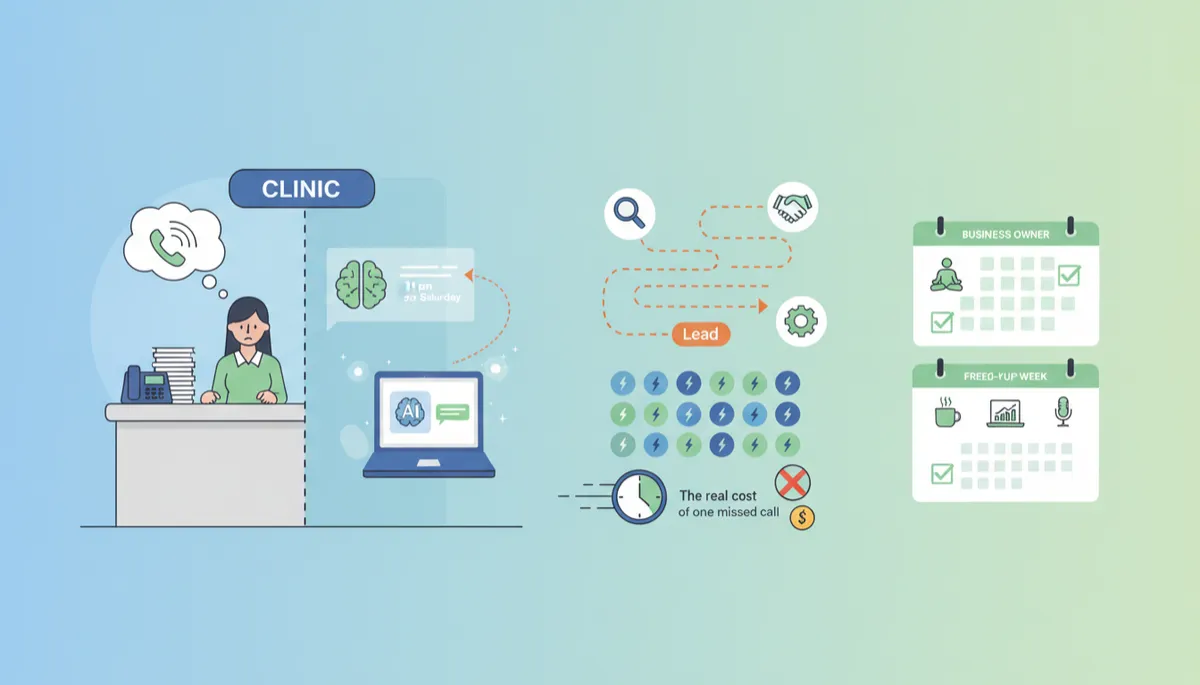
Step into the stories your customers are already living: the enquiry at 11pm, the WhatsApp message that waits hours for a reply, the one missed call that quietly costs you thousands—and how AI can change every chapter.
1. A Day at a Clinic Front Desk: With AI vs Without It
It’s Monday, 8:45am. The waiting room is already full.
Without AI, your front desk staff are juggling everything at once: walk-ins asking about queues, phones ringing nonstop, WhatsApp messages piling up. A mother calls to ask if there’s a paediatric slot today, but the receptionist is checking in three patients and hunting for a misplaced file. The call rings out. No appointment booked, no follow-up, no record it ever happened—just one more invisible missed opportunity and a frustrated parent who calls the clinic down the road instead.
By lunchtime, the queue is behind schedule. New patients fill in forms by hand. Someone at the counter wants to know prices, another wants to reschedule, and your receptionist is apologising more than they’re actually helping. Everyone is working hard; it just never feels like enough.
With AI at the front desk, the same Monday looks different. Patients book or reschedule via an AI assistant before they even arrive. At check-in, a kiosk or mobile link confirms their details, updates records, and pushes the file to your system automatically, just as healthcare analysts predict for 2026 front desk operations (Healthcare IT News; McKinsey, 2026). Routine questions—“What time do you close?”, “Do you take this insurance?”, “Can I get a same-day slot?”—are answered instantly by a virtual assistant trained on your clinic’s rules and pricing, as described in recent coverage on AI-powered front desk tools (Forbes Tech Council, 2023).
Your receptionist is still there—but now they’re focused on people, not paperwork. They handle exceptions and sensitive situations, while AI manages scheduling, reminders, queue estimates, and common enquiries. Instead of firefighting, your front desk feels calm, accurate, and surprisingly human.
2. What Really Happens to Your Enquiry at 11pm on a Saturday
Picture a young couple scrolling on the sofa late on Saturday night. They finally decide: “Let’s book that consultation,” or “Let’s get a quote for air-con servicing before Monday.” They tap your WhatsApp button and send a detailed message with photos, questions, and preferred dates—at 11:03pm.
Without AI, their message lands in your inbox and quietly sinks to the bottom under Sunday’s flood of chats, promos, and personal messages. By the time you see it on Monday morning, they’ve already heard back from someone else. Research on Malaysian businesses shows that without automation, the average WhatsApp first response time drifts beyond six hours, especially after-hours (Flow Digital, 2026). In digital time, that’s an eternity.
With an AI assistant, that same 11:03pm enquiry gets an instant, professional reply: a warm greeting, a quick qualification (“Which area are you in?”), a menu of services, and a suggested time slot or quote range. The assistant can capture all essential details, pre-qualify the lead, and either confirm a booking or queue it neatly for your human team to review the next morning. To the customer, your business feels awake, organised, and eager to help—even when you’re fast asleep.
3. Following One Lead Through Your Business
Let’s follow just one lead: Amir, who’s looking for physiotherapy after a sports injury. He finds you on Google, clicks WhatsApp, and sends, “Hi, do you treat knee injuries? How much is first consultation?”
In a manual setup, your phone buzzes while you’re driving or with another client. You tell yourself, “I’ll answer later.” By the time you do, Amir has already booked with the clinic that replied first. Studies on lead response show that the odds of qualifying a new lead drop 21 times when you reply after 30 minutes instead of within five, and up to 100 times when you wait longer (LeadHunt / MIT-style benchmarks, 2026). That single delay quietly decides where Amir spends his money—and who he recommends to friends and colleagues.
Now imagine the same lead in an AI-supported journey. Amir gets an answer in under a minute: “Yes, we treat knee injuries. First consultation is RMXXX and includes assessment and treatment plan. Would you like to book this week?” The assistant checks your real availability, offers a couple of time slots, and collects his basic details. By the time you look at your dashboard, Amir is already booked, confirmed, and pre-qualified. One lead, smoothly guided from curious to committed—with almost no manual effort from you.
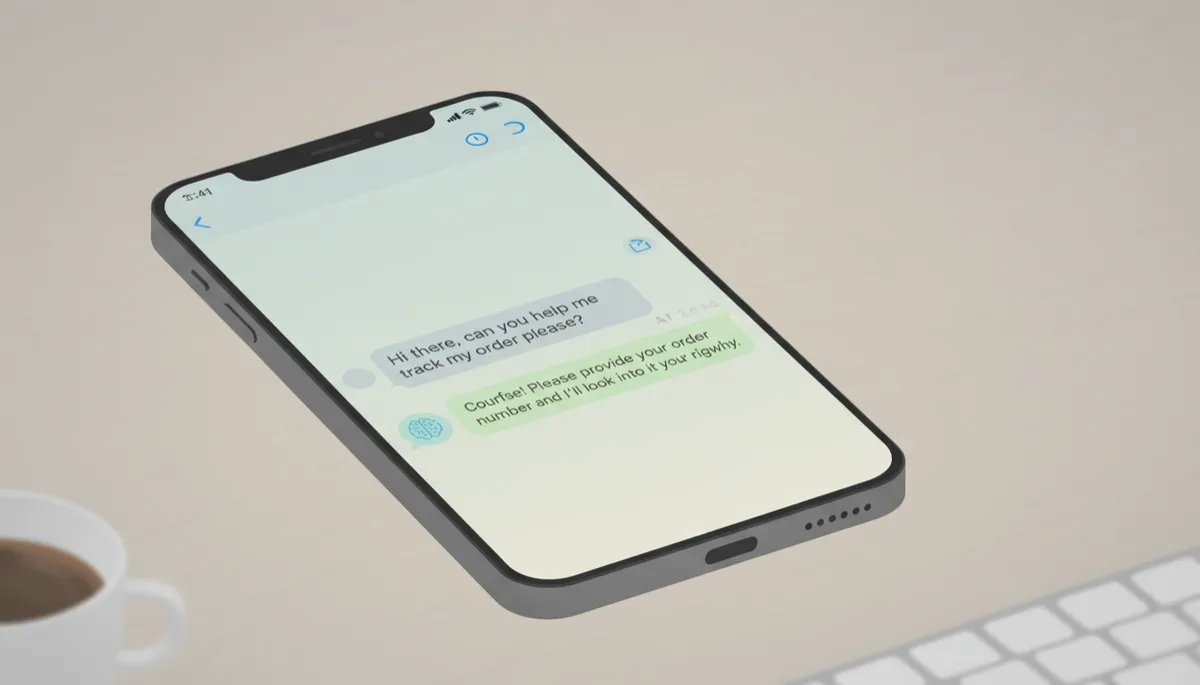
Businesses that reply within minutes win the lion’s share of ready-to-buy leads.
4. How Fast Do 20 Malaysian Businesses Reply on WhatsApp?
If you message 20 Malaysian businesses today, you’ll likely experience a wide range of response times. Some reply within a few minutes. Others take hours. A few never respond at all. Data from Flow Digital shows that, on average, businesses without automation respond after more than six hours, especially outside office hours (FlowDigital.my, 2026). That’s far slower than what customers expect: SACKET reports that most Malaysian consumers want a reply within 10 minutes, and 89% expect one within an hour (Sacket.my, 2026).
On the other side, businesses using WhatsApp AI automation routinely answer in under four minutes, with the best setups replying in under 15 seconds (FlowDigital.my, 2026). That speed matters. ZenWeb’s data shows enquiries answered within five minutes convert at around 48%, while those left for more than 24 hours drop to just 6% (ZenWeb.my, 2026). Entagl’s 2026 Response Velocity Study adds another layer: replies within 60 seconds convert at 35.1%, and in multi-vendor situations, 78.4% of buyers choose the business that responds first (Entagl.com, 2026).
When you imagine “20 Malaysian businesses on WhatsApp,” the real split is simple: a few are fast, responsive, and automated—and they quietly capture most of the serious buyers. The rest are late to the chat and late to the sale.
5. The Real Cost of One Missed Call for a Service Business
Think about a single missed call to a plumbing company, cleaning service, or renovation contractor. On the surface, it’s just one ring you didn’t pick up. In reality, it could be:
A RM500–RM5,000 job that goes straight to a competitor.
A customer in “urgent mode” who now associates your brand with being unreachable.
The loss of future referrals and repeat work from that one relationship.
Business News Daily notes that missed calls can cost small businesses thousands of dollars per year in lost revenue, not counting the hidden damage to reputation and customer satisfaction (BusinessNewsDaily.com, 2023). In service industries, people rarely call just one provider. If you don’t answer, they simply move on. Consistently missing calls or leaving messages unanswered signals that your business is disorganised or too busy to care—exactly the opposite of what you want to project when someone is inviting you into their home or trusting you with their health, property, or finances.
AI-driven call and message management flips this script. Instead of ringing out, each call can trigger an automated WhatsApp follow-up, a voicemail-to-text alert, or an instant chatbot conversation that captures the lead, books a slot, or at least reassures the customer that they’ve been heard and will get a quick callback (Forbes Tech Council, 2023). You may still miss the physical ring—but you don’t have to miss the opportunity.
6. A Week in the Life of a Business Owner Who Stopped Answering Messages Manually
Finally, zoom out to an entire week in the life of a small business owner—let’s say you run a home services company or a small clinic. Before AI, your days look like this: messages at breakfast, voice notes in the car, late-night replies on the sofa, constant guilt about the chats you haven’t answered yet. You’re always “on,” but still feel behind. Important enquiries slip through the cracks. Family time is interrupted by “just one more reply.”
Then you switch to AI-assisted messaging. Here’s what changes over a typical week:
Monday: Your AI assistant handles every new WhatsApp enquiry within seconds, asking the right questions and tagging hot leads. You check your dashboard between jobs instead of juggling raw chats.
Tuesday: Frequently asked questions—pricing, availability, service areas—are answered automatically. You only step in for complex or high-value cases, where your expertise really matters.
Wednesday: You notice fewer “Sorry, we already booked with someone else” messages. Because your AI replies first, you’re now the one setting the standard and capturing the eager buyers.
Thursday: After-hours enquiries still come in, but instead of staring at your phone at 11pm, you trust your assistant to greet, qualify, and schedule. You review everything in the morning over coffee, not half-asleep in bed.
Friday: Your calendar is fuller, but your head is clearer. You’ve stopped living inside WhatsApp, and started living inside your business again—improving operations, training staff, and thinking about growth instead of just surviving the inbox.
Weekend: You finally get a weekend that feels like a weekend. Messages are still flowing, leads are still being captured, but the weight of “I must answer everything, right now, myself” is gone.
Over time, the numbers tell the same story as the research: faster responses, higher conversion, fewer missed calls, and a calmer, more professional experience for everyone involved. But the real win is simpler. AI doesn’t just change your metrics; it changes your days—at the clinic front desk, on WhatsApp at 11pm, and across every quiet moment where a better system lets you finally breathe.
