AI Lead Scoring: Boost Sales Efficiency
Sales, AI Lead Scoring, CRM
AI Lead Scoring: Stop Wasting Time on Cold Prospects
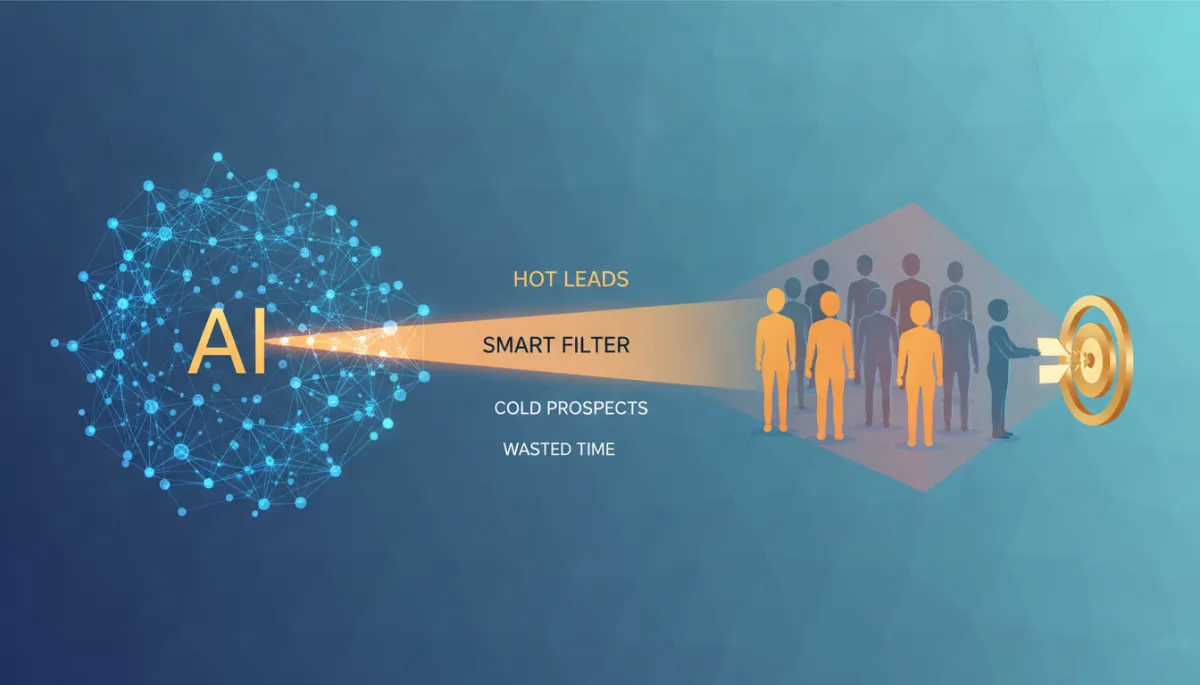
If you’re in sales, you know the grind: endless outreach, half-interested prospects, and deals that stall because the lead was never really ready. AI lead scoring inside your CRM is designed to fix exactly that problem—by showing you which leads are actually worth your time, right now.
What Is Lead Scoring, Really?
Lead scoring is the process of assigning a numeric value to each prospect in your pipeline based on how likely they are to convert. The higher the score, the hotter the lead. Traditionally, this has meant assigning points for things like job title, company size, or whether they downloaded a white paper. The goal is simple: help reps prioritize the conversations that are most likely to turn into revenue.
At its best, lead scoring becomes a shared language between marketing and sales. Marketing agrees to send only leads above a certain score; sales commits to working those leads quickly and consistently. Instead of arguing about “lead quality,” you’re all looking at the same number and the same behaviors behind it.
Manual vs. AI-Driven Scoring: Why Gut Rules Aren’t Enough
Most teams start with manual, rule-based scoring. You sit in a room, decide that a “Director” title is worth 10 points, a demo request is worth 30, and a webinar attendance is worth 15. You plug those rules into your CRM and hope they reflect reality. For a while, this works—until it doesn’t. Markets change, buying committees evolve, and behaviors shift, but your rules stay frozen in time unless someone constantly revisits them.
AI-driven lead scoring flips that model. Instead of guessing which attributes matter, AI looks at your historical data and finds the patterns for you. Tools like HubSpot’s predictive scoring, Salesforce Einstein, Zoho’s Zia, and platforms like MadKudu or 6sense use machine learning to compare thousands of closed-won and closed-lost deals. They learn which combinations of firmographic data, engagement, and timing actually predict revenue—often in ways humans wouldn’t think to test.
By 2026, these AI models are increasingly powered by deep learning and real-time behavioral data, making scores more accurate and more dynamic. According to Gartner and Salesforce, AI lead scoring is moving toward real-time updates, richer behavioral inputs, and automated “next best action” recommendations, so reps not only know who to call, but also how to approach them and when.
💡 Key takeaway: Manual scoring is based on assumptions. AI scoring is based on proof—your own win and loss data.
Behavioral Signals Aurorise Tracks to Separate Hot from Cold
Demographics and firmographics still matter, but in 2026 behavior is the real gold. Aurorise’s AI lead scoring engine plugs into your CRM, website, and engagement tools to track a rich set of behavioral signals that go far beyond “opened an email.”
Website intent patterns: Not just visits, but paths. Multiple visits to pricing, comparison, or integration pages within a short window are treated very differently from one quick blog skim.
Content depth and recency: Time on page, scroll depth, repeat views, and how recently those interactions happened. A lead who binged three case studies this week is hotter than someone who downloaded an eBook six months ago and vanished.
Email and outreach engagement: Replies, forwards, link clicks, and even sentiment in responses using NLP—so a “Yes, but not until next quarter” is treated differently from a generic auto-response.
Product and trial usage: For PLG teams, Aurorise ingests in-app events: which features are used, how often, and by how many users on the account. Heavy usage of high-value features is a strong conversion signal.
Buying committee activity: Multiple stakeholders from the same domain visiting your site, attending webinars, or engaging with campaigns within days of each other—a classic sign that a real project is forming.
These signals are fed into Aurorise’s models, which continuously learn from what actually converts in your pipeline. As your go-to-market motion evolves, the scoring adapts—no need to rebuild rule trees every quarter.
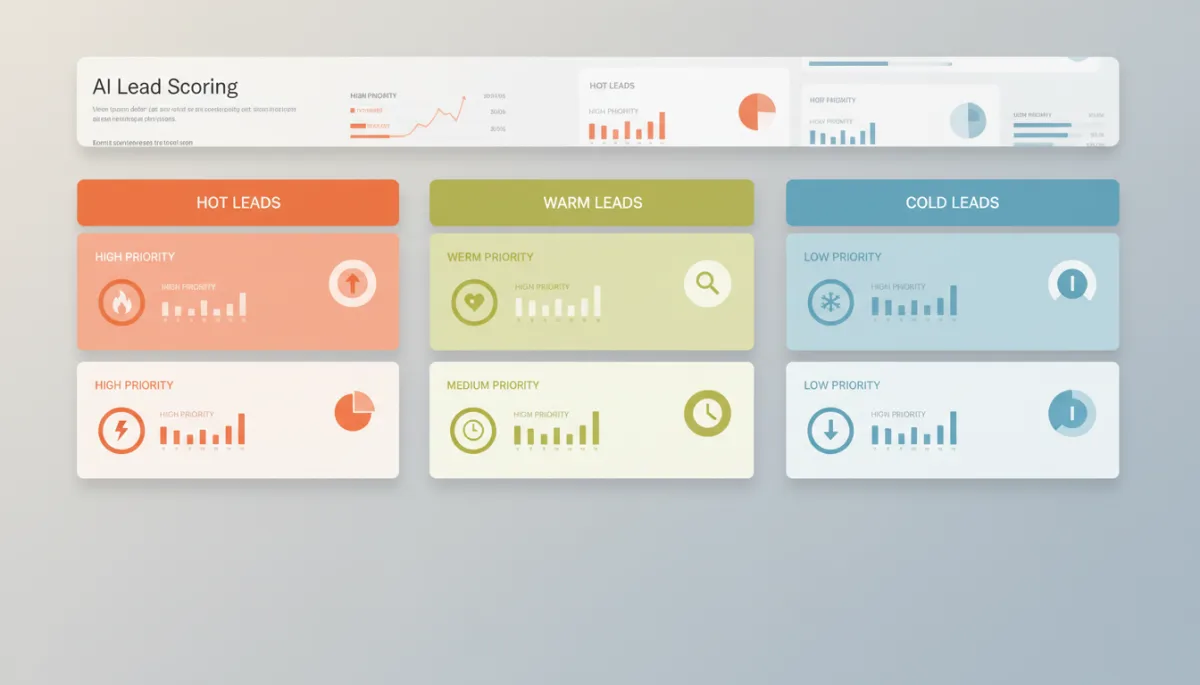
Clear scoring tiers help reps focus on high-intent buyers instead of random names.
Setting Up Score Thresholds That Reps Actually Trust
Even the smartest AI model fails if reps ignore it. The secret is to turn raw scores into simple, actionable tiers that map directly to your sales playbook. With Aurorise, most teams start with three or four thresholds:
Hot (e.g., score 80–100): Clear buying signals. Route immediately to sales, trigger same-day outreach SLAs, and prioritize these in your call blocks.
Warm (50–79): Interested but not yet urgent. Keep in a nurture sequence, with automated check-ins and periodic human touches from SDRs.
Cold (<50): Low intent or poor fit. Keep them in low-effort campaigns. Don’t clog your calendar chasing them unless their behavior changes.
Aurorise also supports account-level thresholds for teams doing ABM. Instead of looking at individual leads in isolation, you can trigger plays when an entire account’s aggregate score crosses a line—for example, when three stakeholders all show strong interest within a week.
💡 Pro Tip: Start with conservative thresholds, then review a month of data with sales. If “warm” leads are closing at a high rate, tighten your definition of “hot” and increase SLAs there.
Real-World Conversion Lift: What AI Lead Scoring Actually Delivers
It’s fair to ask: does any of this move the needle, or is it just another dashboard? Industry data and early adopters point to meaningful, measurable lift when AI lead scoring is set up well and tied to clear sales motions.
Studies of AI-powered scoring in CRMs like Salesforce and HubSpot show 10–30% higher conversion rates from MQL to opportunity when reps focus on AI-identified high-intent leads and adjust outreach timing accordingly.
Teams report shorter sales cycles because reps are engaging buyers who are already in active evaluation, not just vaguely curious.
Pipeline efficiency improves: fewer calls to dead-end prospects, more time spent with accounts that resemble past wins, and clearer handoffs between marketing and sales.
As predictive models continue to evolve through 2026—incorporating deeper behavioral scoring, NLP on emails and calls, and even IoT or product telemetry in some industries—the accuracy of these scores will only increase. That means your conversion lift compounds over time as the system learns from every closed-won and closed-lost deal you log in your CRM.
The Bottom Line for Sales Teams: Fewer Guesswork Calls, More Real Conversations
Chasing the wrong leads isn’t just frustrating—it’s expensive. Every hour you spend trying to warm up a cold prospect is an hour you’re not closing someone who’s already leaning in. AI lead scoring with Aurorise doesn’t replace your instincts; it sharpens them by backing them with data from every deal your team has ever worked.
When your CRM highlights the right people, at the right time, with clear reasons why they’re worth your attention, your day changes. Your call blocks feel more productive. Your pipeline reviews feel less like guesswork. And your quota feels a little less like a mountain and more like a plan.
If you’re tired of wasting time on cold prospects, AI lead scoring is no longer a “nice to have.” It’s the difference between a bloated database and a focused, high-intent pipeline. The data is already there in your CRM—Aurorise simply turns it into a clear signal that every rep on your team can act on today.
