AI Business Automation Guide for SMEs
Business, AI Automation, SME Guide
What Is AI Business Automation? A Practical Guide for SMEs
AI business automation is no longer a luxury reserved for large enterprises. With accessible tools and clear strategies, small and medium-sized enterprises (SMEs) can use AI automation to save time, cut costs, and compete more effectively. This SME guide explains what AI business automation is, how it works, and the practical steps to get started safely and affordably.
1. What Is AI Business Automation?
AI business automation is the use of artificial intelligence to handle repetitive, rules-based or data-heavy tasks that humans would normally perform. Instead of simply following a fixed script, AI automation systems can learn from data, recognize patterns, and make recommendations or decisions within boundaries you define. For SMEs, this often means automating everyday processes such as answering common customer questions, organizing data from emails, routing leads, or forecasting stock levels.
Unlike traditional automation, which relies on rigid “if this, then that” rules, AI automation can interpret natural language, classify information, and adapt as it is exposed to more examples. The result is smarter, more flexible workflows that reduce manual effort while maintaining or even improving quality and speed.
2. Why AI Automation Matters for SMEs
For small and medium-sized businesses, time and resources are always limited. AI automation helps SMEs:
Reduce manual workload: Free your team from repetitive tasks like data entry, report preparation, and basic customer support.
Improve consistency: Automated workflows follow the same steps every time, reducing errors and ensuring a consistent customer experience.
Make better decisions: AI tools can quickly analyze sales, marketing, or operations data and highlight trends humans might miss.
Scale without hiring immediately: As your business grows, AI business automation can handle more tasks without proportional increases in headcount.
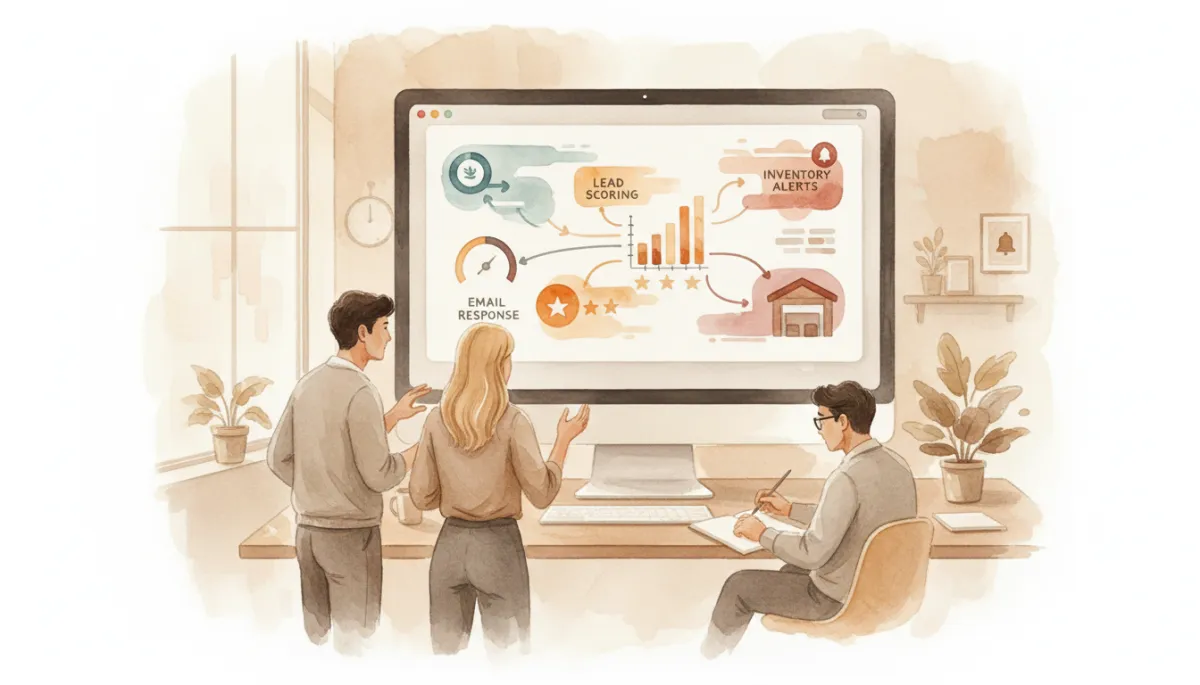
Well-chosen AI automation can reclaim hours each week for higher-value work.
3. An SME Guide to Common AI Automation Use Cases
This SME guide focuses on practical, high-impact areas where AI automation can be introduced with minimal disruption and clear benefits. Popular use cases for SMEs include:
Customer service: AI chatbots and virtual assistants can answer FAQs, route queries, and provide 24/7 support, while handing complex cases to human agents.
Sales and marketing: Lead scoring, personalized email campaigns, and product recommendations can be powered by AI to improve conversion rates and customer loyalty.
Operations and inventory: AI can forecast demand, flag low stock, and suggest optimal ordering patterns, reducing both shortages and overstock.
Finance and administration: Tools can automatically extract data from invoices, categorize expenses, and prepare basic financial summaries for review.
💡 Pro Tip: Start with one or two focused AI automation projects that solve clear pain points, then expand once you see measurable results.
4. Step-by-Step SME Guide to Getting Started
To turn AI business automation from buzzword into real value, SMEs need a simple, structured approach. Use this SME guide as a roadmap:
Identify repetitive tasks: List activities your team performs daily or weekly that are time-consuming but follow clear patterns or rules.
Prioritize by impact: Choose tasks where automation would save the most time, reduce errors, or improve customer experience.
Explore ready-made tools: Many cloud platforms now offer built-in AI automation features for email, CRM, accounting, and support systems, often with SME-friendly pricing.
Start with a pilot: Implement AI automation for one process, document how it works, train your team, and monitor the results over a few weeks.
Measure and refine: Track time saved, error reduction, and customer feedback. Adjust settings, prompts, or workflows based on real-world performance.
5. Managing Risks and Setting Expectations
Successful AI automation for SMEs is not about replacing people; it is about enabling your team to focus on higher-value work. Set clear expectations that AI will handle routine tasks while humans oversee quality, handle exceptions, and build relationships. Always keep a human in the loop for sensitive decisions, and ensure staff know how to step in when needed.
Data privacy and security also matter. Choose reputable vendors, review their security practices, and be transparent with customers about how their data is used. A thoughtful approach will build trust and help your AI business automation initiatives deliver long-term value.
6. Bringing It All Together
AI business automation offers SMEs a practical way to do more with less. By understanding what AI automation is, choosing the right use cases, and following a clear SME guide, you can streamline operations, enhance customer experiences, and support sustainable growth. Start small, learn quickly, and build on your successes. The sooner you begin experimenting, the faster your business will benefit from the power of intelligent automation.
